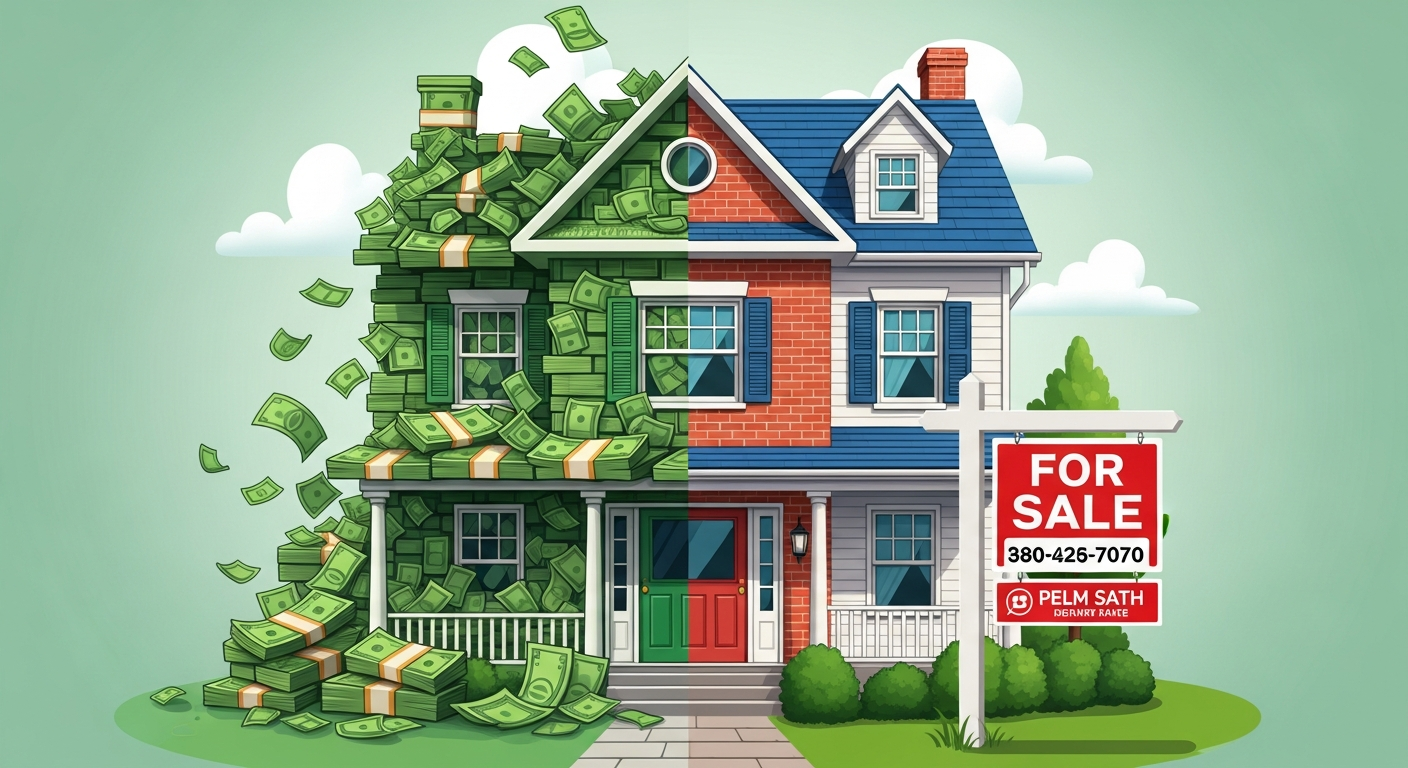
Key Highlights
- A cash offer often means a faster closing process, skipping the delays of traditional mortgage approvals.
- Selling to a cash buyer usually means you can sell your home as-is, avoiding costly repairs.
- You can save on real estate agent commissions when you accept a direct cash offer.
- Listing on the market exposes your home to more potential buyers, which can lead to a higher sale price.
- A cash offer provides more certainty, as the sale is less likely to fall through due to financing issues.
- Choosing between a cash offer and listing depends on your personal financial goals and timeline for the home sale.
Introduction
Deciding how to sell your home is a major financial choice. In today's dynamic real estate market, you have more options than ever. You can go the traditional route of listing your home or explore a direct cash offer. Each path has its own set of advantages and disadvantages. Understanding the differences between these two methods will help you evaluate your options and choose the approach that best aligns with your financial goals and personal needs, ensuring you make the right decision for your situation.
Understanding Cash Offers and Traditional Listings
When you're ready to sell your property, you'll face a primary choice: accept a cash offer or go through a traditional listing. A cash offer involves a buyer who has the funds to purchase your home outright, without needing a loan. This can simplify the process significantly.
On the other hand, traditional listings involve putting your house on the open market, usually with the help of a real estate agent. This method attracts a wider range of potential buyers, including those who need financing. The best choice for you will depend on your home's current condition and your specific needs. Let's look closer at each option.
What Is a Cash Offer in Real Estate?
A cash offer in real estate means a buyer has the full amount of money available to purchase your home without needing a mortgage from a lender. These buyers can be individuals, investors, or companies that specialize in cash transactions. The key benefit here is the removal of the financing contingency, which is often a major hurdle in traditional sales.
Sellers sometimes prefer cash offers over financed buyers because it significantly reduces the risk of the deal falling through. With cash home buyers, there's no need to worry about a loan application being denied at the last minute. This certainty is a huge advantage, especially if you need to sell quickly.
The process is also much simpler. A cash buyer can provide proof of funds to show they have the money ready. This leads to a smoother, faster closing and gives you a fair cash offer without the typical delays associated with mortgage lenders.
How Does Listing on the Market Work?
Listing your home on the market is the more conventional way to sell. This process typically starts with hiring a real estate agent who will help you price your home, market it to potential buyers, and navigate the sale from start to finish. Your home will be listed on the open market, making it visible to a large audience of home buyers.
The selling process for a market listing differs greatly from a cash offer. It involves showings, open houses, and negotiations with multiple parties. Once you accept an offer, the buyer usually needs to secure financing, and the home will likely undergo an appraisal and inspection. These steps can add weeks or even months to the timeline.
While it takes longer, this method can create competition among buyers, potentially driving up the price. However, you'll also have to account for agent commissions and other closing costs that are part of a traditional sale.
Pros of Accepting a Cash Offer
Choosing to accept a cash offer can bring several significant advantages, especially if your priority is speed and simplicity. A cash sale streamlines the entire transaction, removing many of the hurdles that can slow down a traditional home sale. You can avoid the uncertainty that comes with financed offers and move forward with confidence.
The primary benefit is often the speed of the transaction. A cash buyer doesn't need to wait for a bank's approval, which means the closing process can be completed in a fraction of the time. Let's explore some of the key benefits of a quick cash sale.
Faster Closing Times
Does selling to a cash buyer close faster than listing on the open market? Absolutely. One of the biggest draws of a cash offer is the incredibly fast closing timeline. Since there's no mortgage lender involved, you can skip the lengthy underwriting process, which often takes 30 to 60 days in a traditional sale.
With a quick cash sale, the entire process can be wrapped up in as little as a week or two. The cash buyer already has the funds, so once you accept the offer, you can move straight to closing. This is ideal if you need to relocate quickly for a new job or have other urgent reasons to sell.
The streamlined cash sale process means:
- No waiting for loan approval.
- Less paperwork from banks.
- A firm closing date you can rely on.
Fewer Contingencies and Less Paperwork
A traditional home sale often comes with contingencies that can derail the transaction, such as financing and appraisal contingencies. A cash offer typically removes these roadblocks, creating a much smoother path to closing. Cash buyers often waive these conditions because they aren't relying on a lender's approval.
The financial benefits of a cash sale also include simplicity and reduced stress. You won't have to worry about the deal falling apart because a buyer’s loan was denied or the appraisal came in low. The buyer provides proof of funds, giving you confidence that the transaction will be completed.
This simplified approach means:
- No financing contingencies.
- Often no appraisal contingency.
- Significantly less paperwork, leading to lower closing costs and a faster closing process.
Cons of Accepting a Cash Offer
While a cash offer provides speed and convenience, it's not without its potential downsides. The most common concern for sellers is the possibility of receiving a lower offer compared to what you might get on the open market. The convenience of a cash sale sometimes comes at a price.
Additionally, by focusing only on cash buyers, you are dealing with a smaller pool of buyers. This lack of competition can also impact the final sale price. It's important to weigh these potential drawbacks against the benefits before deciding if a cash sale is right for you.
Potential for Lower Offers
Are cash offers usually lower than traditional market listings, and why? Yes, it's common for a cash offer to be below the fair market value of your home. Cash buyers, who are often investors, are looking for a good deal. They factor in the costs of any needed repairs and the risk they take by purchasing a property as-is.
The lower offer price is a trade-off for the speed and convenience a cash sale provides. You're saving time and avoiding repair costs and realtor commissions, but that value is often reflected in the offer you receive. The goal is to find a fair cash offer that balances these factors.
Here's a simple comparison to illustrate the potential difference in your final payout:
Feature / Traditional Listing / Cash Offer
Sale Price
Potentially higher (e.g., $300,000)
Often lower (e.g., $270,000)
Commissions
5-6% (e.g., $15,000-$18,000)
Usually $0
Repair Costs
Varies (e.g., $5,000)
Usually $0
Closing Time
30-60 days
7-14 days
Limited Buyer Competition
When you choose to pursue a cash sale, you are inherently narrowing your field of potential buyers. The number of people who can afford to buy a house with cash is significantly smaller than the number of people who can qualify for a mortgage. This limits the competition for your property.
In a traditional market listing, buyer competition can lead to bidding wars, driving the final sale price above your initial asking price. With a cash offer, you're typically negotiating with a single party. This lack of competition can be a risk, as you might miss out on a higher offer that could have emerged in a more competitive environment.
Market conditions play a role here. In a seller's market, listing your home traditionally could yield multiple offers and a better financial outcome. However, if you need to sell quickly or your home needs repairs, the certainty of a single cash offer might outweigh the potential for a bidding war.
Advantages of Listing Your Home on the Market
Putting your home on the open market has some distinct advantages, especially if your primary goal is to get the highest possible sale price. By listing with a real estate agent, you expose your property to the largest possible audience, maximizing your chances of finding the perfect buyer who is willing to pay top dollar for your home.
This broad exposure can create a competitive environment that works in your favor. When multiple buyers are interested, it can lead to bidding wars and ultimately a higher sale price than you might get from a single cash offer. Let's explore how a traditional home sale can benefit you.
Greater Exposure and More Buyers
When you list your home on the market, your real estate agent will use the Multiple Listing Service (MLS), which syndicates your listing to thousands of websites, reaching a vast network of home buyers and their agents. This level of exposure is something you can't achieve with a direct sale. It brings your property to the attention of everyone in the local market and beyond.
More exposure naturally leads to more interested buyers. You can host open houses and schedule individual showings, allowing many people to see your home and imagine themselves living there. According to the National Association of Realtors, the majority of home buyers use an agent, who will find your property through the MLS.
This broad reach offers several benefits:
- Access to a much larger pool of potential buyers.
- Increased foot traffic through showings and open houses.
- A higher likelihood of receiving multiple offers.
Potential for Higher Sale Prices Through Bidding
One of the biggest pros of listing your home is the potential for a bidding war. When multiple buyers are competing for your property, they are motivated to submit their best and highest offers to win. This competition can drive the final sale price well above your initial asking price, maximizing your return.
Traditional sales create an environment where this is possible. Your agent can strategically manage offers to encourage competition and negotiate on your behalf to secure the best possible terms. This is a key difference compared to a single cash offer, where negotiation is often limited.
Ultimately, this process can lead to a significantly higher final sale price. If your property is in a desirable location and in good condition, the chances of sparking a bidding war are even greater, making a traditional listing a financially attractive option.
Drawbacks of Listing on the Market
Despite the potential for a higher sale price, traditional listings come with their own set of challenges. The process is often much longer and more complicated than a cash sale. You'll need to contend with preparing your home for sale, which can involve significant time and money.
From making repairs to paying agent commissions, the costs associated with a traditional sale can eat into your profits. The home's market value can be impacted by a lengthy closing process and the various hurdles you'll need to clear. Let's look at some of these drawbacks in more detail.
Longer Sale Timeline
The most significant drawback of a traditional home sale is the extended timeline. From the moment you list your home to the closing date, the process can take several months. You have to wait for the right buyer, who then needs to secure financing, which alone can take 30 to 60 days.
This longer sale timeline contrasts sharply with fast home sales from cash offers. The selling process for a market listing includes multiple steps: marketing, showings, negotiations, inspections, appraisals, and the buyer's loan underwriting. Each stage introduces potential delays that can push back your closing date.
If you need to sell your home quickly due to a job relocation, financial hardship, or any other reason, this lengthy process can be a major source of stress. Traditional buyers and their lenders set the pace, leaving you with less control over when the sale will be final.
Need for Repairs, Showings, and Agent Commissions
Listing your home on the market often requires you to invest time and money upfront. Most buyers are looking for a move-in-ready home, so you may need to make significant repairs or updates to attract them. This could range from minor cosmetic fixes to major repairs like a new roof or HVAC system.
In addition to repairs, you'll have to deal with the inconvenience of showings. This means keeping your home in pristine condition and being ready to leave at a moment's notice for potential buyers to tour it. On top of that, you will have to pay realtor commissions, which are typically 5-6% of the final sale price.
These requirements can be a dealbreaker for some sellers.
- Major repairs: Can be costly and time-consuming.
- Constant showings: Disrupt your daily life.
- Agent commissions: Reduce your net profit from the sale.
Conclusion
In conclusion, choosing between a cash offer and listing your home on the market ultimately depends on your unique situation and priorities. Cash offers provide a swift and hassle-free transaction, ideal for those seeking a quick sale without the burden of repairs or showings. On the other hand, listing your home can maximize its exposure and potentially yield a higher sale price through competitive bidding. By weighing the pros and cons of each option, you can make a well-informed decision that aligns with your needs. If you're still uncertain about which route to take, consider reaching out for expert advice tailored to your specific circumstances.
Frequently Asked Questions
How do I know if a cash offer is fair compared to listing?
To determine if a fair cash offer has been made, compare it to your home's estimated market value. A real estate agent can provide a comparative market analysis. While a cash buyer's offer may be lower, factor in the savings from no commissions, repair costs, or holding costs to see the true difference.
Are there risks to selling for cash versus the open market?
Yes, risks in a cash sale include potentially receiving a lower price than you would on the open market and encountering scams. Always verify the buyer's legitimacy. Listing on the market carries risks too, like a sale falling through due to financing issues or changing market conditions.
In what situations does a cash offer make the most sense?
A cash offer is ideal for sellers needing quick sales, such as those facing foreclosure, a sudden job loss, or needing to relocate quickly. It's also a great option for properties needing significant repairs that you don't want to handle, providing both financial relief and peace of mind.