Key Highlights
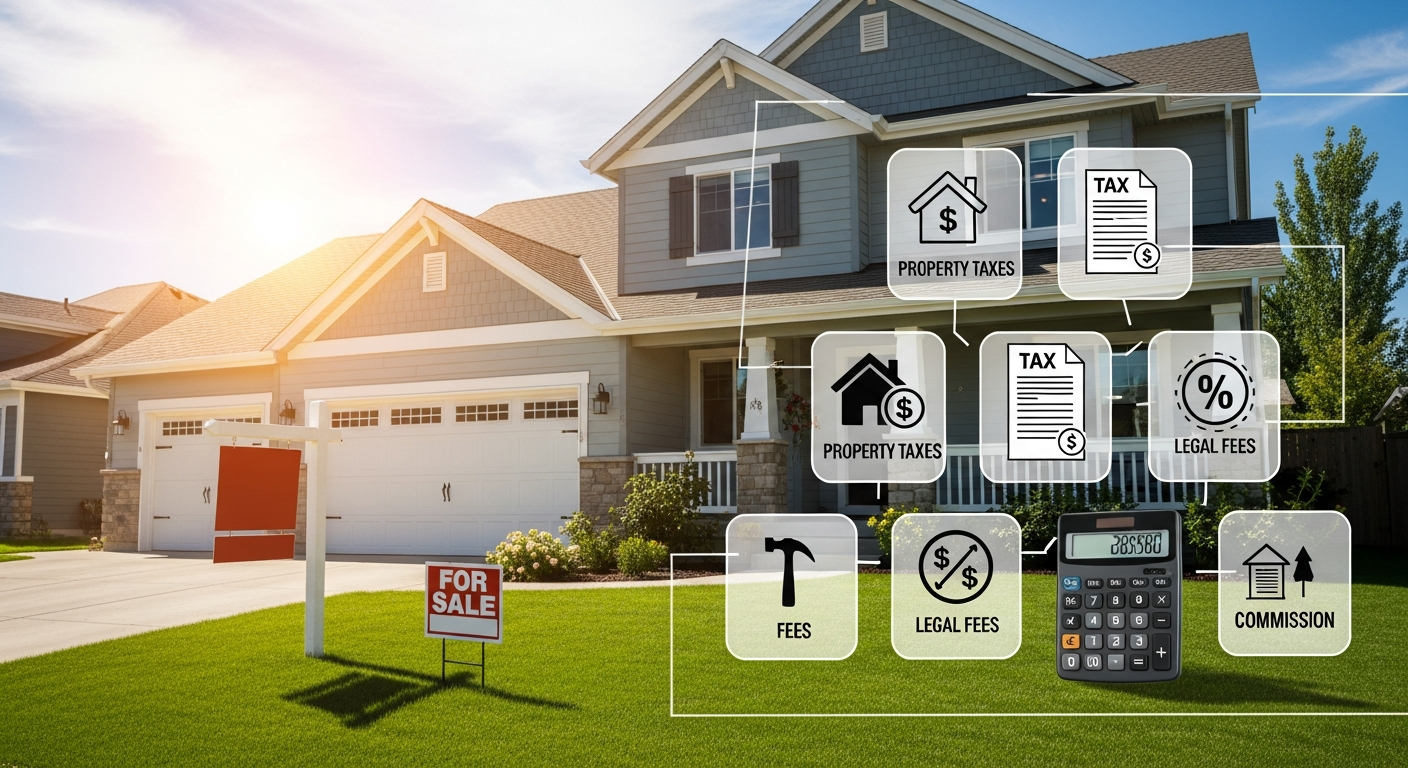
- Selling a home in California involves several costs, including capital gains tax, transfer taxes, and agent commissions.
- Home sellers may owe both federal and state capital gains tax on the profit from their home sale.
- You can exclude up to $250,000 (or $500,000 if married) of capital gain if the property was your primary residence.
- California taxes all capital gains as regular income, with rates from 1% to 12.3%, as determined by the Franchise Tax Board.
- Beyond taxes, expect to pay for closing costs like transfer taxes, title insurance, and escrow fees.
- Understanding these tax implications helps you accurately calculate your net proceeds from the real estate transaction.
Introduction
Selling your home is a major financial milestone, but it comes with its own set of expenses. For many home sellers, navigating the various taxes and fees can feel overwhelming. Beyond the sale price, you need to account for closing costs, agent commissions, and potential taxes on your profit. This guide breaks down the essential taxes and fees you'll encounter when selling your home in California, helping you understand the real estate process and keep more of your hard-earned equity.
Overview of Taxes and Fees When Selling a Home
When you complete a home sale, the costs go beyond just paying your real estate agent. You'll face several taxes and fees that can impact your final profit. These include capital gains tax on your earnings, property taxes prorated to the date of sale, and real estate transfer taxes.
Understanding these tax implications is crucial. Closing costs, which cover agent commissions, title fees, and settlement fees, also reduce your net proceeds. Knowing what to expect helps you prepare your tax return and avoid any surprises. We will explore these costs in more detail to give you a clear picture of your financial responsibilities.
Why Understanding Seller Costs Matters
For home sellers, a clear grasp of all associated costs is vital for a successful sale. The final sale price is just the starting point. Hidden fees and closing costs can significantly reduce the amount of money you walk away with. Being unaware of these expenses can lead to financial strain and disappointment.
By understanding the full scope of real estate transactions, you can accurately calculate your net proceeds. This allows you to budget effectively for your next move, whether you're buying a new home or investing the profits elsewhere. It empowers you to make informed decisions throughout the selling process.
Ultimately, knowledge is power. When you know what to expect, from agent commissions to transfer taxes, you can negotiate better terms and avoid last-minute surprises at the closing table. This preparation ensures a smoother, more predictable financial outcome from your property sale.
Sale Timeline and When Fees Are Due
The sale timeline for a house dictates when various fees must be paid. Most of your expenses, known as closing costs, are due on the date of sale when the transaction is finalized. These are typically handled by the escrow or title company and deducted from the sale proceeds before you receive your funds.
Your real estate agent will guide you through this process, but it's helpful to know what to expect. Some costs, like home repairs or staging, are paid before you even list the property. However, the bulk of the fees are settled at closing.
Here’s a general breakdown of when common selling costs are due:
- Home Preparation Costs: Paid before listing (e.g., repairs, staging).
- Agent Commissions: Paid at closing from the sale proceeds.
- Settlement and Title Fees: Paid at closing.
- Transfer Taxes: Paid at closing.
- Capital Gains Tax: Paid when you file your annual tax return.
Capital Gains Tax Explained
When you sell your home for more than your purchase price, the profit is known as a capital gain. The federal government and state governments may tax this gain. This capital gains tax is a crucial factor to consider in any home sale, as it can significantly affect your net profit.
The amount of tax you owe depends on several factors, including the difference between your sale price and cost basis, how long you owned the home, and your income level. This tax is reported on your annual income tax return. Next, we’ll look at how this applies to home sales and how to calculate your potential taxable gain.
How Capital Gains Tax Applies to Home Sales
Capital gains tax is levied on the profit you make from the sale of a home. This profit, or capital gain, is the difference between the home's sale price and its adjusted cost basis (what you originally paid plus the cost of improvements). This gain is considered taxable income, and you'll need to report it to the IRS and your state's tax authority.
The tax rate you pay depends on how long you owned the property. If you owned it for a year or less, the profit is a short-term capital gain and is taxed at your regular income tax rate. If you owned it for more than a year, it's a long-term capital gain, which typically has a more favorable tax rate.
For many homeowners, a significant portion of this gain can be excluded from taxes if the property was their primary residence. However, for second homes or investment properties, the entire capital gain is usually subject to tax, which can result in a substantial tax bill.
Calculating Gains on Your Home Sale
To figure out your capital gain, you need to determine your home’s adjusted cost basis. This starts with the original purchase price. Then, you add the cost of any capital improvements you've made, such as a new roof or a kitchen remodel. Subtracting this adjusted cost basis from your home's sale price gives you your total gain.
For example, if you bought your home for $400,000 and spent $50,000 on improvements, your adjusted cost basis is $450,000. If you sell it for $700,000, your capital gain is $250,000. This is the figure used to calculate your potential capital gains tax.
Here's a simple table to illustrate the calculation:
Item / Amount
Sale Price
$700,000
Purchase Price
$400,000
Home Improvements
$50,000
Adjusted Cost Basis
$450,000
Total Capital Gain
$250,000
This gain is then used to determine what, if any, capital gains tax you owe on your net proceeds.
Impact of Occupancy (Primary Residence vs. Second Home)
Whether the home you're selling is your primary residence or a second home has a major impact on your capital gains tax liability. The IRS offers a significant tax break for the sale of a primary residence, which is not available for second homes or investment properties.
To qualify for this exclusion, you must meet the ownership and "use test." This means you must have owned and lived in the property as your main home for at least two of the five years leading up to the sale. If you meet these criteria, you can exclude a large portion of your taxable gain.
The rules for a second home are different. When you sell a second home, you generally cannot use the exclusion. This means the entire capital gain is subject to capital gains tax. The key differences are:
- Primary Residence: Can exclude up to $250,000 (single) or $500,000 (married) of gain.
- Second Home: The entire gain is typically taxable.
- Occupancy: The use test is crucial for qualifying a property as a primary residence.
Federal and State Capital Gains Rules
The tax on your capital gain is determined by both federal and state rules. The federal government has specific tax rates for long-term capital gains that are often lower than regular income tax rates. However, how much you pay depends on your total income and filing status.
In California, the rules are different. The Franchise Tax Board taxes all capital gains as ordinary income, meaning your profit from the sale of your home is taxed at the same rate as your salary. Understanding both sets of rules is essential for accurately estimating your tax liability. Below, we’ll break down the federal and California-specific tax rates.
Federal Capital Gains Tax Rates
The federal government taxes long-term capital gains at different rates depending on your taxable income and filing status. For 2025, there are three main tax brackets: 0%, 15%, and 20%. Most middle-income taxpayers fall into the 15% bracket. For example, single filers with a taxable income between $48,351 and $533,400 would pay 15% on their long-term gains.
Your filing status—whether you are single, married filing a joint return, or head of household—plays a significant role. Married couples filing jointly have higher income thresholds for each tax bracket. For instance, they can have a taxable income up to $96,700 and still pay 0% on their capital gains.
It's important to remember that these rates apply to your taxable gain after any exclusions. When you prepare your income tax return, you'll use these federal capital gains tax rates to calculate what you owe the IRS on the profit from your home sale.
California State Capital Gains Considerations
Unlike the federal system, California does not have a separate, lower tax rate for capital gains. The Franchise Tax Board treats any profit from the sale of your home as regular income. This means your taxable gain is added to your other income for the year and taxed at your marginal state income tax rate, which can range from 1% to 12.3%.
This approach can lead to a higher state tax bill, especially for sellers in high-income brackets or those with a large taxable gain. Whether you live in Los Angeles, San Francisco, or elsewhere in the state, the same rules apply.
Here are some key points about California's capital gains tax:
- Gains are taxed as ordinary income.
- Tax rates vary from 1% to 12.3% depending on your income.
- There is no state-level exclusion similar to the federal $250,000/$500,000 break.
- All gains from the sale of your home must be reported on your state tax return.
Reporting Capital Gains to the IRS
After you sell your home, you must report the sale to the federal government on your income tax return. This is true even if you don't owe any tax because your gain is fully covered by the primary residence exclusion. Proper reporting is a requirement to avoid any issues with the IRS.
You will use specific forms to detail the transaction. The main form is Schedule D (Form 1040), Capital Gains and Losses. You'll also likely need to fill out Form 8949, Sales and Other Dispositions of Capital Assets, to provide the details of the sale, including the date of sale and the sale price.
To correctly report the sale of your home, you should:
- Use Form 8949 to list the details of the transaction.
- Transfer the totals to Schedule D of your tax return.
- If you're claiming the primary residence exclusion, you'll note that on the forms.
- Consult a tax professional to ensure everything is filed correctly.
Common Tax Exemptions and Deductions for Sellers
For home sellers, tax exemptions and deductions can make a huge difference in how much you owe on your income tax. The most significant tax break is the primary residence exclusion, which can eliminate the tax on a large portion of your profit from the sale of a home.
Additionally, certain selling expenses and the cost of home improvements can be used to reduce your taxable gain. These deductions effectively lower your profit on paper, which in turn lowers your tax bill. Understanding these options is key to maximizing your net proceeds. We'll explore these exemptions and deductions next.
Exclusion for Primary Residence Sales
The largest tax benefit available to most home sellers is the primary residence exclusion. This IRS rule allows you to exclude a significant amount of profit from the sale of your main home from your taxable income. If you are a single filer, you can exclude up to $250,000 of gain. If you are married and file a joint tax return, you can exclude up to $500,000.
To qualify for this valuable exclusion, you must meet both the ownership and the use test. You must have owned the home for at least two years and have lived in it as your primary residence for at least two years within the five-year period ending on the date of the sale.
Here are the key requirements for the primary residence exclusion:
- Ownership Test: You owned the home for at least two of the last five years.
- Use Test: You lived in the home as your main home for at least two of the last five years.
- Look-Back Test: You haven't used the exclusion on another home sale in the last two years.
Deductible Selling Expenses and Improvements
While you can't deduct selling expenses directly from your income, you can use them to reduce your calculated capital gain. These costs are subtracted from the sale price, which lowers your total profit and, consequently, your tax liability. This is an important way to increase your net proceeds from real estate transactions.
Similarly, the cost of capital improvements can be added to your home's original purchase price to increase its cost basis. Capital improvements are significant upgrades that add value to your home, like a new kitchen or an addition, not simple repairs. A higher cost basis means a smaller taxable gain.
Common deductible selling expenses and improvements include:
- Real estate agent commissions
- Settlement fees and escrow fees
- Title insurance fees
- Major home improvements (e.g., remodeling, new roof)
- Advertising and legal fees related to the sale
Transfer Taxes and Related Fees
When ownership of a property changes hands, state and local governments often charge transfer taxes. In California, this is known as a documentary transfer tax. This fee is calculated based on the property's sale price and is paid at closing. The transfer tax rate can vary significantly depending on your city and county.
These fees are a standard part of closing costs and are handled by the title company or escrow agent. Along with transfer taxes, you may also encounter other local assessments. It's important to be aware of these potential costs as they add to your total expenses.
Real Estate Transfer Taxes in California
In California, real estate transfer taxes are a standard part of selling a property. The state allows counties to charge a "documentary transfer tax" at a rate of $1.10 per $1,000 of the property's value. This tax is one of the key state taxes you'll encounter at closing.
However, many charter cities in California impose their own additional transfer tax, which can be much higher. For example, cities like Los Angeles and San Francisco have significantly higher transfer tax rates than the county standard. These local assessments can add thousands of dollars to your closing costs.
Here are a few things to know about transfer taxes in California:
- The base rate is $1.10 per $1,000 of property value.
- Charter cities can and often do charge a higher transfer tax rate.
- The tax is based on the sale price and is paid when the deed is recorded. For example, Los Angeles County has its own rate structure.
Who Pays Transfer Taxes?
In California, who pays the transfer taxes often depends on local custom and negotiation. While there is no statewide law mandating whether the buyer or seller pays, in many parts of the state, it is customary for the seller to cover this expense. This makes transfer fees a typical component of seller costs.
However, this is not a hard-and-fast rule. In some real estate markets, particularly in Northern California, the cost may be split between the buyer and seller. In a competitive market, a buyer might offer to pay the transfer taxes to make their offer more attractive.
Ultimately, the responsibility for paying transfer taxes is a negotiable point in the purchase agreement. Just like agent commissions and other closing costs, it's something that should be clearly defined in the contract to avoid any confusion. If not specified, local tradition often prevails, which usually places the burden on the seller.
Documentary Stamp Taxes and Local Assessments
The documentary transfer tax is essentially a tax on the legal document that transfers property ownership. In California, this tax is collected when the deed is recorded with the county. While the state sets a base rate, local assessments by cities and counties can increase the total amount due significantly.
These local assessments are why the total transfer tax can vary so much from one location to another. For example, selling a home in a city with its own charter and higher tax rate will result in a much larger transfer tax bill compared to selling in an unincorporated area that only charges the county rate.
Key points about these taxes include:
- It is a tax on the transfer of real estate.
- The amount is based on the property's value.
- Rates vary by city and county in California.
- Payment is made at closing during the real estate transaction.
- It's a separate cost from property taxes or title fees.
Additional Costs and Hidden Fees When Selling
Beyond taxes, a variety of other seller expenses will come out of your sale proceeds. These closing costs can sometimes feel like hidden fees if you're not prepared for them. They typically include escrow fees, title insurance premiums, and agent commissions, all of which are handled at closing.
These settlement fees cover the services required to finalize the transaction legally and securely. Other miscellaneous expenses, like notary fees or courier charges, can also add up. We'll explore some of these key additional costs so you have a complete picture of what to expect.
Escrow and Title Insurance Fees
When you sell a home, escrow and title insurance fees are standard closing costs. Escrow fees are paid to the neutral third party, often an escrow or title company, that handles the funds and paperwork for the transaction. This fee typically amounts to about 1% of the sale price and covers the administrative work of closing the sale.
Title insurance is another crucial expense. It protects the new owner (and their lender) from any future claims against the property's title. In Southern California, it's common for the seller to pay for the owner's title insurance policy, while in Northern California, the buyer often pays. The cost can range from 0.5% to 1% of the sale price.
These settlement fees are essential for a secure transaction. Here's a quick summary:
- Escrow Fees: Cover the closing agent's services.
- Title Insurance: Protects against title defects.
- Who Pays: Varies by region and negotiation.
- Cost: Usually a percentage of the sale price.
Agent Commissions and Closing Costs
One of the largest closing costs for sellers is the real estate agent commissions. Traditionally, the seller paid the commission for both their listing agent and the buyer's agent, typically totaling 5-6% of the home's sale price. However, recent industry changes mean sellers now primarily negotiate and pay their own agent's commission, usually around 2-3%.
While sellers are no longer required to offer compensation to the buyer's agent, some may still choose to do so as a selling incentive. This cost is deducted from the proceeds of the home sale at closing.
Here is a look at how commissions might break down on a $500,000 home sale:
Fee / Percentage of Sale Price / Cost
Listing Agent Commission
2.5%
$12,500
Buyer's Agent Commission (if offered)
2.5%
$12,500
Total Agent Commissions
5%
$25,000
This illustrates how agent commissions can be a significant portion of your total expenses.
Other Miscellaneous Seller Expenses
In addition to the major costs, several smaller miscellaneous expenses can pop up during a home sale. While individually they may not seem like much, they can add up. These are part of the overall seller expenses you should budget for.
These charges often appear on your final settlement statement and cover various administrative and legal necessities. For example, you might see fees for a notary, document preparation, or courier services to transport paperwork securely. There may also be recording fees charged by the county to officially log the sale.
Here are some common miscellaneous expenses to anticipate:
- Notary fees
- Courier and wire transfer fees
- Document preparation fees
- Prorated property taxes and HOA dues
- Termite inspection or other required reports
Conclusion
Selling a home involves more than just receiving an offer; it requires a comprehensive understanding of the various taxes and fees that can heavily influence your profits. From capital gains tax to transfer taxes and hidden costs, being informed helps you navigate this complex process with confidence. By taking the time to educate yourself on seller costs, you’ll be better equipped to make sound financial decisions. Remember, knowledge is power in real estate transactions! If you’re ready to dive deeper into your selling strategy, consider reaching out for a free consultation to guide you through every step of the process.
Frequently Asked Questions
Do I owe taxes if I sell my house at a loss?
No, if you sell your home for less than your adjusted cost basis, you have a capital loss, not a capital gain. For home sellers, a loss on the sale of a personal residence is not deductible on your tax return, but you also won't owe any capital gains tax.
Can I avoid taxes by buying another property?
No, you generally cannot avoid capital gains tax simply by buying another property. The old "rollover" rule no longer exists for a primary residence. Your tax liability from the sale of a home is a separate real estate event, though you might be able to defer taxes on an investment property through a 1031 exchange.
How do I estimate my total taxes and fees before selling?
To estimate your costs, start with your expected sale price. Subtract estimated closing costs (around 6-10% of the price), your remaining mortgage balance, and any potential capital gains tax. A real estate agent or a net sheet calculator can help you get a clearer picture of your net proceeds and overall tax implications.