


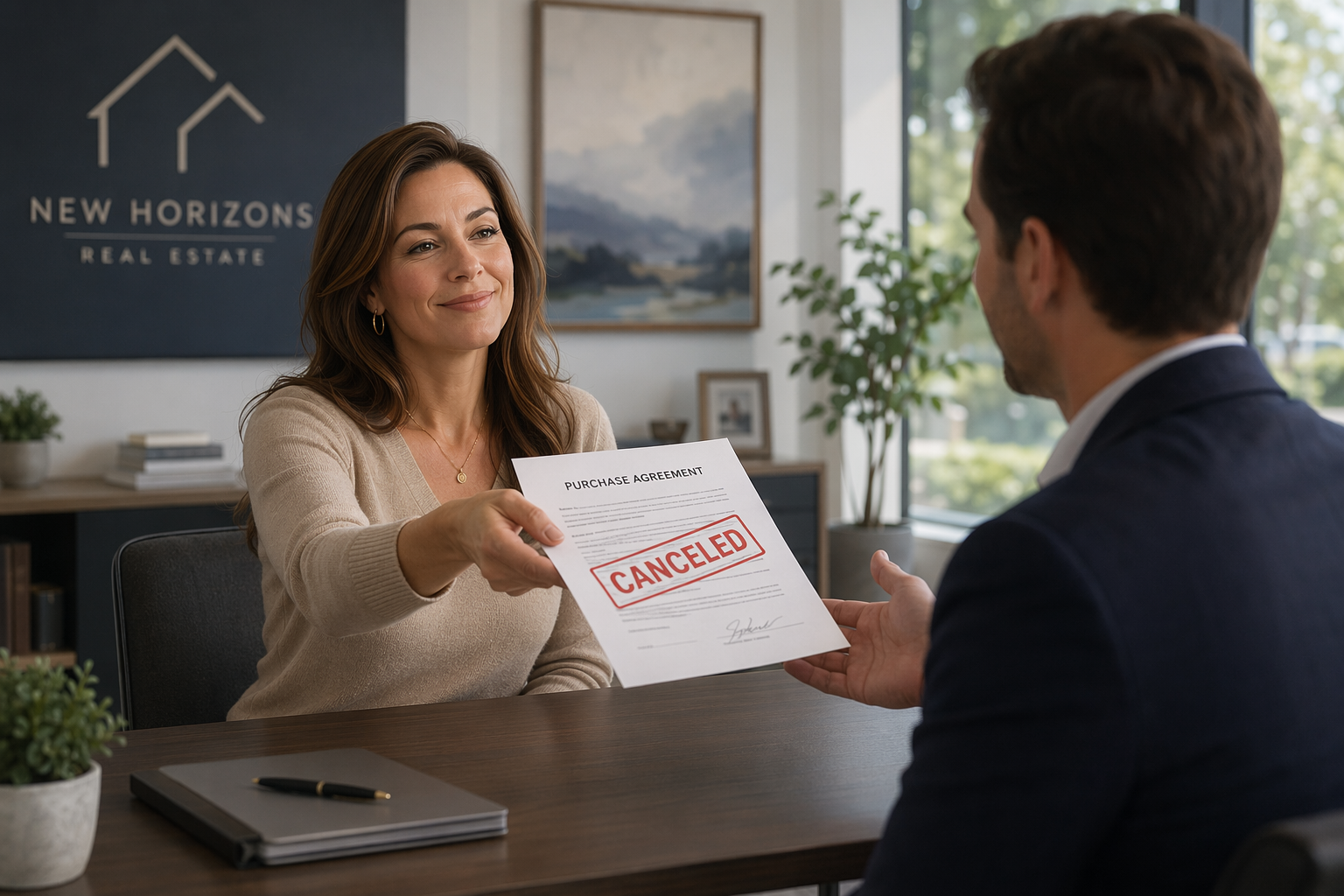
Key Highlights
- Review your real estate contracts first, especially the termination clause and end date.
- Many listing agreements allow early termination, but some include a cancellation fee.
- Valid concerns often include poor service, weak marketing, or missed agent’s responsibilities.
- Start with a direct, professional conversation before escalating to the managing broker.
- Get any release in writing so your early termination is clear and documented.
- Switching agents can be worth it if a stronger agent helps your home sell faster and for more.
Introduction
Signing a real estate agent contract can feel like a major commitment, so it is normal to wonder what happens if the relationship stops working. The answer usually comes down to the terms of your agreement, your legal rights, and whether early termination is allowed. If your agent is not acting in your best interest, you may have options. The key is knowing what to check, what to say, and how to move forward without creating avoidable problems.
Understanding Realtor Contracts in the United States
In the United States, most real estate contracts with agents fall into two groups: listing contracts for sellers and a buyer’s agency agreement for buyers. These agreements define the working relationship, spell out duties, and set an expiration date.
Just as important, they may explain how to cancel. Valid reasons often include poor communication, weak service, or failure to meet promised obligations. The code of ethics also matters because agents are expected to protect your interests. To know your next move, start by understanding which agreement you signed.
Types of Realtor Agreements Homeowners Sign
Most homeowners sign one of two common agreements, and each carries different contract terms. If you are selling, you will usually see listing agreements. If you are buying, you may sign a buyer’s agency agreement before homes are shown, especially after the nar settlement changed buyer representation practices.
Here are the main types to know:
- Listing agreements often give one agent the exclusive right to market and sell your property.
- A buyer’s agency agreement explains how your agent represents you while you search and negotiate.
- Both documents usually include an expiration date and steps for ending the relationship.
Before you try to cancel, identify which form you signed and read it line by line. The steps to terminate a buyer’s agreement with a real estate agent often depend on the notice rules, fees, and release language written into that specific contract.
Key Clauses and What They Mean for Cancellations
The most important section to find is the termination clause. This part explains whether you can end the legal relationship early, how much notice you must give, and whether your agent or brokerage has to approve the release.
Next, look for money language. Some agreements include a cancellation fee or require repayment of marketing costs. Others explain commission rates and when those charges still apply, even after the contract ends. That is why the answer to whether there are fees or penalties is often yes, but only if your contract says so.
Finally, check for a protection period. This clause can let a former agent claim payment if you sell to or buy from someone they introduced during a certain window after cancellation. That detail can shape your next move more than you expect.
Common Reasons Homeowners Cancel Realtor Contracts
Homeowners usually cancel because the relationship is no longer helping the sale or purchase move forward. Poor communication, weak follow-through, and concerns about the agent’s performance are common triggers. In some cases, life changes also force a pause.
Still, your reason should be matched against the terms of your agreement. A valid complaint can help your case, but the contract and its end date still control the process. Before acting, it helps to separate frustration from a real issue with service, strategy, or conduct.
Lack of Communication or Unsatisfactory Service
One of the biggest reasons people want out is lack of communication. If calls, texts, or emails go unanswered, you may start feeling ignored. That is especially frustrating when you are making time-sensitive decisions about offers, pricing, or next steps.
Service problems go beyond silence. Poor communication may come with a lack of marketing, missed updates, or failure to explain what is happening in the market. When an agent is not meeting basic agent’s responsibilities, those performance issues can be strong grounds to ask for a release.
So how can you cancel a contract with your realtor after signing? Start by documenting what is not working. Then have a direct conversation and request an early release. If that fails, review the termination clause and contact the managing broker for help.
Changes in Home Sale or Purchase Plans
Sometimes the problem is not the agent at all. Job relocations, family emergencies, or financial shifts can change your plans fast. When that happens, early termination may become necessary even if the relationship has been fine.
This can create a tricky situation because the contract still applies until the end date unless both sides agree otherwise. That means your best option is to review the terms of your agreement before assuming you can walk away without conditions.
Will canceling affect your home buying or selling process? It can. You may face a short delay while paperwork is handled, listings are removed, or a new strategy is set. Even so, if your plans changed or your first agent is not helping, a reset may still be the smarter move.
Is It Possible to Break a Realtor Contract Early?
Yes, it is often possible to break a realtor contract early, but the answer depends on the contract terms. Some agreements allow early termination with written notice, while others require approval, payment, or both.
That is why you should not guess. Check the expiration date, read the release language, and think about the legal implications before acting. If the process is handled carefully, you may be able to get an early release and move on without creating a larger dispute.
Legal Rights and Obligations When Ending an Agreement
If you want to fire your realtor after signing, your legal rights begin with the contract itself. The terms of your agreement define what each side promised to do, how long the agreement lasts, and what steps are required to end it.
Your agent also has fiduciary duties. They are supposed to protect your interests, communicate honestly, and act with care. If those duties are not being met, you may have a stronger position when asking for release. Ethical concerns or a conflict issue can also matter.
Still, rights come with obligations. You may need written notice, payment of agreed costs, or compliance with a protection clause. If the wording is unclear or the money involved is significant, getting legal advice from a real estate attorney can help you avoid an expensive mistake.
Common Scenarios for Terminating Before Expiration
Several situations commonly lead to early termination before the contract expires. The clearest ones are repeated communication failures, weak marketing, misrepresentation, or conduct that seems to put the agent ahead of the client. Those issues can make staying in the agreement hard to justify.
Other cases are less dramatic but still real. You may want to pause your move, switch strategies, or work with someone else who feels like a better fit. In those situations, the contract terms still control what happens next, even if everyone stays professional.
Yes, it may be possible to break a listing contract before the expiration date, but you should expect conditions. Some agreements mention an early termination fee, and many include a protection period tied to buyers or properties the agent already introduced. If you are unsure, legal advice can provide clarity.
Step-by-Step Process to Cancel Your Realtor Contract
The cleanest way to cancel is to follow the process in your contract. Start with the termination clause, check the notice period, and understand any contract terms tied to fees, release timing, or a protection window.
Then move in order. Have a direct conversation, send a written request, and keep records of every reply. These steps matter because a casual cancellation can create legal implications later. The next sections walk through what to review and how to notify your agent properly.
Reviewing Your Contract for Termination Clauses
Before you contact anyone, pull out the signed agreement and read it carefully. Many people try to cancel based on frustration alone, but the termination clause is what tells you how to proceed. It may allow immediate release, require notice, or explain when fees apply.
Focus on these items first:
- The expiration date and whether the contract is close to ending anyway
- Any sections that outline commission details, cancellation costs, or reimbursement rules
- The negotiated terms of your agreement covering early release or written notice
This is the practical answer to how you can cancel a contract with your realtor after signing. You need to know exactly what the contract terms say before you ask for termination. The stronger your understanding, the easier it is to make a clear request and avoid confusion.
Formally Notifying Your Realtor and Required Documentation
Once you understand the contract, notify your agent in a professional way. Start with a direct conversation if possible. Explain that you want to end the agreement, state your reason briefly, and ask for a written release. Keeping the tone calm often makes the process easier.
After that, follow up in writing. Your message should include your name, property address if relevant, the date of the agreement, the section you are relying on, and the requested end date. Include only necessary personal information and keep a copy for your records.
If your agent does not respond or refuses, send the same request to the managing broker. That step matters when the agent is part of a larger brokerage. If the dispute grows or the contract language is confusing, legal advice may be worth getting before you take further action.
Potential Costs and Penalties for Canceling a Contract
Canceling a contract does not always cost money, but it can. Some agreements include a cancellation fee or an early termination fee, while others require repayment of specific marketing expenses. The answer depends on what your paperwork says.
You should also review any section that outlines commission details and the protection period. Those clauses can affect whether money is still owed after the relationship ends. If the dispute becomes serious, ignoring the contract could even lead to legal action, so careful review matters.
Standard Fees or Commissions When Breaking an Agreement
Fees vary from one agreement to another, which is why there is no single national rule. Some clients owe nothing if the agent agrees to a mutual release. Others may owe a cancellation fee, an early termination fee, or reimbursement for documented costs already spent by the listing agent.
You also need to think about commissions. In some cases, contract terms may still allow payment if the deal closes with someone the agent introduced earlier. That is especially important when a protection clause remains active after cancellation.
Possible Cost / What It May Mean
Cancellation fee
A flat amount charged for ending the agreement early
Early termination fee
A fee tied specifically to breaking the contract before the end date
Marketing reimbursement
Repayment for photos, advertising, or listing costs already spent
Commission claim
Payment that may still apply if the former agent introduced the buyer or property
Avoiding Hidden Penalties and Negotiating Waivers
Not every cost is obvious at first glance. Hidden penalties can appear in sections about reimbursement, protection periods, or commission rights that survive after the legal relationship ends. That is why reading beyond the headline fee matters.
You may be able to negotiate a waiver, especially if the relationship clearly is not working. Many agents would rather release an unhappy client than continue a strained arrangement. A respectful request can sometimes remove or reduce charges that seem burdensome.
To protect yourself, look for:
- Any costs outside the main cancellation section
- Language that keeps payment obligations alive after release
- Terms that can be waived by written agreement
If the wording is hard to follow, legal advice can help you understand the negotiated terms of your agreement before you sign off on anything.
Effect of Canceling a Realtor Contract on Your Property Transaction
Canceling can affect your property transaction, but the size of the impact depends on timing. If you are early in the process, the disruption may be small. If you already have ongoing offers, showings, or negotiations, the change can take more coordination.
Home buyers and sellers should also think about third parties. Lenders, buyers, sellers, and your listing agent or buyer’s agent may all be touched by the switch. That does not mean you should stay in a bad fit. It just means the handoff should be handled carefully.
How It Impacts the Home Buying or Selling Timeline
A cancellation can slow things down for a short time. Sellers may need their listing updated or removed, while home buyers may pause showings until the prior agreement is fully released. That can shift the home buying timeline or sale timeline by days or, in some cases, longer.
Still, speed is not the only goal. If your current representation is weak, staying put may hurt your best interest more than a short delay would. A stronger agent can often recover lost time with better pricing advice, better follow-up, and better execution.
If the change becomes complicated, the managing broker may step in to smooth the transition. That can help keep your transaction moving. In many cases, a brief pause is worth it when it leads to better representation and a better overall result.
Transfer of Listing and Handling Ongoing Offers
Yes, you can often switch to another realtor after canceling your existing contract, but you need a clean release first. For sellers, that means confirming the listing agent and brokerage have formally ended the listing and, if needed, removed it from the MLS.
If offers are already in play, be careful. A former agent may still have rights tied to an active buyer, especially during the protection period. Buyers also need to watch for homes previously shown to them because those details can affect who gets paid later.
The nar settlement made written buyer agreements more important, so switching now requires even more attention to paperwork. Whether you were working with a redfin agent or any other agent, the safest path is to document the release, list covered properties or buyers, and then move forward.
Switching to a New Realtor After Cancellation
Once you are free from the prior agreement, you can start looking for a new agent. This is your chance to find the right realtor instead of repeating the same mistake. The goal is not just to replace someone quickly, but to find the right fit.
Sometimes the best option is staying within the same company if the issue was only with one person who was part of a larger brokerage. Other times, a full change makes more sense. What matters most is choosing better this time.
Best Practices for Selecting a Better Agent
Choosing your replacement agent should feel more intentional than hiring the first agent. You already know what did not work, so use that experience to sharpen your standards. A quick decision can put you right back in the same spot.
Good best practices include:
- Compare agent’s performance, not just personality or marketing claims
- Ask how often the new agent communicates and what support you will actually get
- Review the next contract before signing so you understand exit terms from day one
Yes, you can switch to another realtor after canceling, and it can be a smart move. If a better agent helps your property sell for more and quicker, the change is often worth it. The key is making sure the next relationship is a true right fit for your needs.
Using Data to Compare Local Realtors through TrueParity
The best way to find the right realtor after canceling is through data, not guesswork. You want to compare real results, not just promises. That means looking at how agents perform in your area, how consistently they close, and how they stack up against peers.
That is where TrueParity can help. TrueParity is a real estate tech company that helps you find the best agents in your area proven by data. Instead of relying on whoever marketed hardest or who is part of a larger brokerage, you can take a more data-driven approach.
This matters because the next choice affects your timeline and your bottom line. Before sharing personal information or agreeing to commission rates, use TrueParity to compare local realtors with stronger evidence behind the decision.
Why Choosing the Right Agent Matters
The right agent does far more than unlock doors or post a listing. They guide pricing, marketing, negotiations, and communication. When those agent’s responsibilities are handled well, your chances of getting the best price improve.
Just as important, a strong agent acts in your best interest and follows the code of ethics expected in the profession. That is why choosing carefully matters so much. The difference between average representation and great representation can change both speed and outcome.
The Role of a Talented Agent in Getting the Best Price Fast
A talented agent can influence both how fast your property moves and how much money you walk away with. That is why it can be worth canceling a weak contract if it opens the door to stronger representation. A better result often outweighs the hassle of making a change.
For sellers, this is especially important under an exclusive right listing. Once one agent controls the listing, your outcome is closely tied to that person’s strategy and execution. If the agent’s performance is poor, your home can sit longer or attract weaker offers.
In contrast, a strong agent supports your best interest with better communication, better positioning, and better follow-through. You do not switch just for the sake of switching. You switch because the right person can help you reach the best price faster and with less friction.
Avoiding Repeat Mistakes When Starting Over
Starting over gives you a second chance to hire smarter. Think about what went wrong with the first agent. Was it communication? Weak follow-through? A mismatch in expectations? Naming the real issue helps you avoid the same disappointment again.
You should also watch for warning signs early. Repeated performance issues, vague answers about service, or possible conflict of interest concerns deserve attention before you sign anything new. A polished pitch means very little if the daily work falls short.
The safest path is to follow best practices. Ask direct questions about agent’s responsibilities, communication style, and what happens if the relationship does not work out. If you learn from the first experience, your next choice is much more likely to produce a better result.
How TrueParity Simplifies Finding Top Realtors in Your Area
After canceling, many homeowners make a rushed replacement decision because they want to get moving again. That is understandable, but it is risky. The better approach is to use data-driven comparisons so you can sort through local realtors based on real performance, not just brand familiarity or ad visibility. This follows the best practices that many people skip the first time.
That is why TrueParity stands out. TrueParity helps connect you with top agents using data to identify who is actually performing well in your market. If you want the right realtor after a frustrating experience, TrueParity gives you a clearer and more confident way to choose.
How TrueParity Uses Data to Match You with Proven Agents
Finding a replacement agent should not depend on luck. You need a system that helps you compare options in a way that feels practical and objective. That is why a data-driven process is so useful after a disappointing first experience.
TrueParity helps by focusing on proven agents, not just the loudest ones. TrueParity is built to help homeowners identify agents in their area who are backed by data, making it easier to narrow the field to the best option instead of guessing.
That approach can save time and reduce stress. Rather than interviewing agents blindly, you can start from a stronger shortlist. If your goal is to find the right fit after cancellation, TrueParity gives you a more informed starting point and a better chance at a stronger outcome.
Steps to Connect with Top Agents on TrueParity
Once your prior agreement is fully ended, connecting with a new agent should be simple and structured. The main goal is to avoid another rushed decision. Using TrueParity can help you move from frustration to a more informed search.
A smart process includes these best practices:
- Confirm you have written release from the old agreement before contacting anyone new
- Use TrueParity to compare top agents in your area through a data-based lens
- Share only the personal information needed to begin the conversation and evaluate fit
From there, talk with the agents you are considering and ask clear questions about communication, strategy, and contract flexibility. If you want the right agent after cancellation, TrueParity offers a cleaner path to that next step.
Conclusion
In conclusion, navigating the process of canceling a realtor contract can be daunting, but it is essential for homeowners to prioritize their needs and ensure they have the right agent working for them. A great realtor can significantly impact the speed and price of a property sale or purchase. If your current agent isn't meeting your expectations, remember that it's worth taking the necessary steps to switch to someone who can better serve you. Utilize data-driven platforms like TrueParity to find the best agents in your area, helping you make an informed decision. With the right approach and resources, you can confidently transition to a new realtor who aligns with your goals. Explore more about how TrueParity can assist you in finding top-notch agents tailored to your needs.
Frequently Asked Questions
Are there penalties or fees when I cancel my realtor contract?
There can be. Some contracts include a cancellation fee, an early termination fee, or repayment of marketing costs. It all depends on the negotiated terms of your agreement and the specific contract terms. If anything is unclear, getting legal advice before canceling is a smart step.
Can I fire my realtor and hire a new one immediately?
Usually, yes, but only after the first agent has released you in writing or the contract has ended. Early termination rules come from the terms of your agreement. One of the best practices is to avoid contacting a new agent until the prior relationship is fully and clearly terminated.
What should I include in my cancellation notice to make it official?
Your cancellation notice should include your name, the property address if relevant, the agreement date, the contract section supporting termination, and the requested end date. Mention the termination clause, follow any notice period, include only needed personal information, and confirm your earlier direct conversation in writing.


