Key Highlights
- Stunning real estate photography is crucial for making strong first impressions on potential buyers.
- Preparing the property by decluttering and staging is the first step to getting great photos.
- Using natural light will make your home feel bright, airy, and inviting to viewers online.
- Highlighting unique features and recent upgrades can make your listing stand out from the competition.
- Professional photos capture your home's best angles and create a complete picture with both interior and exterior shots.
- Working with a skilled real estate agent ensures your photos are accurate and appealing.
Introduction
When selling your home, what’s the first thing potential buyers see? The photos. In today's digital real estate market, eye-catching images are everything. High-quality real estate photography isn't just about making your property look nice; it's about telling a story and creating an emotional connection that invites buyers to imagine their life there. Before anyone steps foot through your door, they've already formed an opinion based on your online listing. Great photos can make your property irresistible, encouraging more views and faster sales.
Eye-Catching Photos for House Sale: Your Ultimate List of Must-Haves
Creating captivating listing photos is your secret weapon for attracting potential buyers. It's not just about pointing and shooting; it's a thoughtful process that combines preparation, technique, and the right equipment. Homes with professional photos get significantly more views and can sell much quicker than those with amateur shots.
From decluttering and staging to mastering lighting and angles, each step plays a vital role. Whether you're considering DIY real estate photography or hiring a pro, understanding these must-haves will ensure your home shines online. Let’s explore the key elements that will make your photos stand out.
1. Declutter and Stage Every Room for Maximum Appeal
Before a camera even enters the room, preparation is key. No amount of editing can hide a cluttered or messy space. Your first step should always be to declutter and depersonalize. This helps potential buyers envision themselves living in the home without distractions.
Start by removing personal items like family photos, excessive furniture that makes a room feel small, and any general clutter from surfaces. A minimalist approach allows the home's best features to take center stage. Think of it as creating a blank canvas for the next owner. Here are a few staging tips:
- Remove excess furniture to create clear pathways and highlight the room's size.
- Clear kitchen counters, leaving only a few decorative items like a vase of flowers.
- Ensure bathrooms are free of personal toiletries for a clean, spa-like feel.
If your home is empty, consider virtual staging. This affordable technique digitally adds furniture and decor to photos of empty rooms, adding warmth and style. Whether you choose traditional staging or virtual, a well-staged home is crucial for impactful real estate photography and can significantly boost buyer interest.
2. Use Natural Light to Showcase Bright and Airy Spaces
Lighting can make or break a real estate photo. Natural light is your best friend, as it creates a warm, inviting, and authentic atmosphere that artificial light often struggles to replicate. A well-lit room appears more spacious, clean, and welcoming in pictures.
To get the best light, schedule your photo shoot during the brightest part of the day. This is typically from late morning to early afternoon when the sun is high. For exterior shots, the "golden hour"—the hour after sunrise or before sunset—provides soft, flattering light that adds a beautiful glow to your property. Here are a few ways to maximize light:
- Open all curtains and blinds to let as much daylight as possible flood the rooms.
- Turn on all interior lights to brighten dark corners and balance the exposure.
- Avoid shooting in direct, harsh sunlight, which can create strong shadows and glare.
Even overcast days can work in your favor, as the diffused light can reduce shadows and create even lighting. The goal is to make every space feel bright and airy, which is a major selling point for buyers.
3. Highlight Unique Features and Upgrades in Each Area
Your photography should do more than just show rooms; it should tell the story of what makes your home special. Every property has unique features and selling points, and it's your job to draw attention to them. These details are what can set your listing apart in a crowded market.
Think about what makes your property valuable. Did you recently renovate the kitchen or update the bathrooms? Do you have stunning architectural details like ornate moldings, exposed brick, or built-in bookshelves? These are the elements that buyers notice and remember. Your photo gallery should include close-up shots of these highlights.
- Capture recent upgrades like new appliances or energy-efficient windows.
- Photograph unique architectural details that add character to the home.
- If there's a great view, make sure it's prominently featured in your photos.
Don't just photograph a room; photograph the lifestyle it offers. By focusing on these special characteristics, you create a more compelling visual narrative that resonates with buyers and helps them see the true value of your home.
4. Capture Both Interior and Exterior Shots for a Complete View
To give potential buyers a comprehensive understanding of your property, you need to show them everything. This means capturing a balanced mix of both interior and exterior shots. The exterior photo, or "curb appeal" shot, is often the first image a buyer sees, so it needs to make a strong impression.
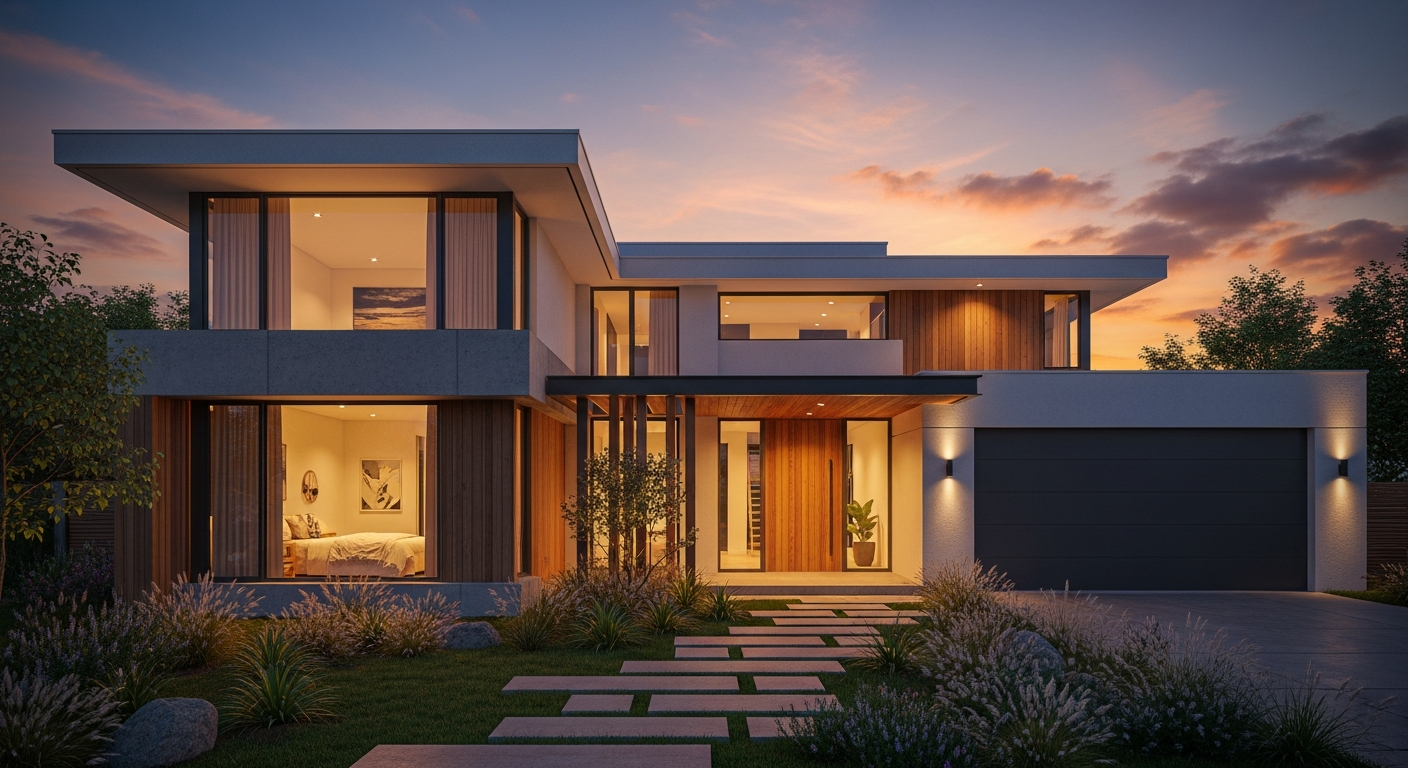
For the exterior, make sure the lawn is mowed, hedges are trimmed, and pathways are clear. Capture the front of the house from an angle that shows its depth. Don't forget to photograph outdoor living spaces like patios, decks, or pools. For larger properties or homes with unique surroundings, drone photography can be a game-changer.
- The primary exterior shot should capture the front of the house attractively.
- Highlight outdoor living areas like patios, gardens, or pools.
- Consider aerial photography or drone shots to showcase the entire property and its location.
Inside, follow a logical flow from the entryway to the main living areas, kitchen, bedrooms, and bathrooms. Combining these interior and exterior shots gives buyers a complete virtual tour, helping them feel as if they've already walked through the home.
5. Take Photos from the Right Angles and Heights
The perspective from which you take a photo dramatically impacts how a room is perceived. To make your photos look professional and appealing, consistency in height and angle is crucial. Most real estate photos look best when shot from about chest height, around 4-5 feet off the ground.
This height mimics how a person naturally views a room, making the photos feel more relatable. When shooting, it's essential to keep your camera level to avoid distorted lines. Crooked walls or tilted horizons are a telltale sign of amateur photography. A tripod can be invaluable for maintaining a consistent height and keeping your shots perfectly straight.
- Shoot from a corner to showcase two walls and create a sense of depth.
- Keep the camera level to ensure vertical lines (walls, doorways) are straight.
- Use the rule of thirds by placing key features along grid lines for a balanced composition.
Using a wide-angle lens can help you capture more of a room, but be careful not to create unnatural distortion. The goal is to provide an accurate yet flattering representation of the space.
6. Ensure Crisp, High-Resolution Images with Proper Equipment
While you don't need the most expensive camera on the market, using the right equipment makes a significant difference in the quality of your photos. Blurry or low-resolution images can make your property look unappealing and can deter buyers. Your goal should be to produce crisp, clear, high-resolution images that look great on any screen.
A full-frame or crop-sensor camera with a wide-angle lens is the standard for professional real estate photography. A sturdy tripod is also essential to ensure sharpness and prevent camera shake, especially in lower light conditions. Understanding basic camera settings is also important.
- Use a tripod to keep your camera steady and your images sharp.
- Set your camera to a low ISO to minimize graininess in the photos.
- Pay attention to settings like shutter speed and white balance to achieve proper exposure and true-to-life colors.
If you don't have the right equipment or feel overwhelmed by the technical aspects, hiring a professional photographer is a wise investment. They have the gear and expertise to capture your home in its best possible light, ensuring your listing has the high-quality visuals it needs to succeed.
7. Edit Photos for Brightness and Clarity Without Overdoing It
After the photo shoot, post-processing is where you can turn good photos into great ones. However, the key to effective editing is subtlety. The goal is to enhance the images, not to misrepresent the property. Over-editing can break a buyer's trust when they see the home in person.
Focus on basic adjustments that improve the overall look and feel of the photos. This includes correcting colors, adjusting brightness and contrast, and straightening lines. You want the images to be a polished but honest reflection of what the space actually looks like.
- Adjust the white balance to ensure colors are accurate and natural.
- Increase brightness to make rooms feel more open and inviting.
- Straighten any crooked lines to give the photos a professional, polished look.
Avoid common mistakes like over-saturating colors or digitally adding elements that aren't there, like a fake blue sky. The purpose of editing is to present the home in its best light while maintaining its authenticity. This approach builds confidence with potential buyers and sets realistic expectations for a showing.
Why Consulting a Real Estate Agent Elevates Your House Sale Photos
While great photos are essential, they need to be part of a larger, effective marketing strategy. This is where a knowledgeable real estate agent becomes your most valuable asset. An experienced agent understands what local buyers are looking for and can guide the photography process to highlight the features that will generate the most interest for your real estate listing.
They can help ensure your photos are not just beautiful but also an honest and accurate representation of your property. Many top agents also have established relationships with professional photographers, simplifying the process for you. Their expertise helps bridge the gap between a pretty picture and a compelling sales tool.
How Real Estate Agents Ensure Accurate and Honest Representation
A good real estate agent knows that trust is the foundation of a successful sale. While stunning photos are designed to attract attention, they must also provide an accurate representation of the property. Misleading images can lead to disappointed prospective buyers and wasted time for everyone involved.
An experienced agent will review the real estate photos to make sure they are both flattering and fair. They'll advise against using extreme wide-angle lenses that distort room dimensions or editing techniques that alter permanent features of the home. Their goal is to set realistic expectations so that when buyers visit in person, the home meets or exceeds what they saw online.
- Agents ensure that photos don't misrepresent the size or condition of rooms.
- They help highlight genuine features without creating a false impression.
- Their guidance ensures the visual marketing aligns with the property's true character.
Ultimately, an agent's oversight of the photography process helps build credibility and ensures that the buyers who schedule a viewing are genuinely interested in what your property has to offer.
Working with Agents Who Partner with Professional Photographers
One of the biggest advantages of hiring a top real estate agent is gaining access to their network of trusted professionals. Many excellent agents have long-standing partnerships with a professional real estate photographer who understands the local market and knows how to make listings shine.
This collaboration simplifies the entire process for you. Your agent will coordinate the shoot, ensuring the photographer captures all the key selling points. These photographers often have years of experience and can deliver high-quality images with a quick turnaround time, which is crucial for getting your listing on the market promptly.
- Agents often have preferred photographers who are proven to deliver great results.
- This partnership streamlines scheduling and communication, saving you time and effort.
- Professionals know how to capture the right shots to maximize buyer interest.
By working with an agent who already has a photographer on their team, you can be confident that your property's visual marketing is in expert hands from the very beginning. This synergy is designed to get your home sold faster and for the best possible price.
Top Qualities to Look for in a Real Estate Agent for Listing Photos
When choosing a real estate agent, it’s important to find someone who understands the power of visual marketing. An agent's approach to listing photos can tell you a lot about their overall strategy and attention to detail. You want someone who prioritizes professional photography as a cornerstone of their marketing plan.
Look for an agent with a proven track record, access to top-notch resources, and excellent communication skills. These qualities indicate that they are invested in presenting your property in the best possible way to attract qualified buyers. Here are the key attributes that make an agent excellent.
Proven Track Record of Successful Sales
An agent’s past performance is one of the best indicators of their future success. When evaluating potential agents, look for a proven track record of successful sales in your area. This demonstrates not only their experience but also their ability to effectively market and close deals.
Examine their current and past listings. Do the photos look professional and compelling? Are the properties presented in a way that would make you want to schedule a viewing? An agent with consistently high-quality listings is likely one who understands how to generate buyer interest and drive faster sales. Their portfolio is a direct reflection of their marketing prowess.
- Look for an agent with a strong history of sales in your neighborhood.
- Review their online listings to assess the quality of their photography and marketing.
- Years of experience often translate to a deeper understanding of what sells.
Choosing an agent with a solid track record gives you confidence that your property will be marketed effectively, from the initial photos to the final negotiations.
Access to Professional Photography Resources
A top real estate agent doesn't just rely on basic photos. They leverage a full suite of professional photography resources to make a listing stand out. This shows a commitment to investing in the marketing of your home, which can lead to a higher selling price and a quicker sale.
When interviewing agents, ask about the types of visual assets they use for their listings. The best agents often provide a comprehensive package that goes beyond standard images. They understand that immersive experiences can capture a buyer's attention and imagination in a way that still photos alone cannot.
- Inquire if they offer professional photos taken by an experienced photographer.
- Ask about advanced options like drone shots to showcase the property's exterior and lot.
- See if they provide a virtual tour or 3D walkthrough for an immersive online experience.
An agent who invests in these high-quality resources is demonstrating that they are serious about getting you the best possible outcome for your sale.
Excellent Communication and Attention to Detail
Excellent communication and a keen eye for detail are hallmarks of a great real estate agent. From the very beginning, your agent should be clear about their marketing plan and keep you informed every step of the way. This includes how they plan to stage and photograph your home.
An agent with strong attention to detail will notice the little things that can make or break your listing photos. They'll help you prepare your home for the shoot, ensuring everything is perfectly in place to create the most appealing images. This meticulous approach extends to how they use the photos in their marketing materials.
- A great agent communicates their strategy for photos and marketing clearly.
- They pay close attention to staging and preparation details before the shoot.
- They leverage high-quality listing photos across their website, social media, and other platforms.
This level of care and communication ensures that your property is presented flawlessly and that you feel confident and informed throughout the selling process.
Using Data to Find the Best Real Estate Agent in Your Area
Finding the right real estate agent can feel overwhelming, but you don't have to rely on guesswork. The best way to find a top-performing agent is by using data. Objective metrics like sales history, listing price accuracy, and speed of sale provide a much clearer picture of an agent's effectiveness than a simple recommendation from a friend. Data-driven insights help you identify agents with a proven track record of success in your specific market.
Companies are now making this data accessible to homeowners, allowing you to make an informed decision based on performance. By analyzing an agent's past results, you can predict how they will handle your sale and choose someone who consistently achieves excellent outcomes for their clients.
Data Point / Why It Matters for Choosing an Agent
Average Days on Market
Shows how quickly an agent sells homes compared to the local average. A lower number is better.
List-to-Sale Price Ratio
Indicates how close the final sale price is to the initial asking price, showing pricing accuracy.
Number of Homes Sold
Demonstrates experience and a history of successful transactions in your area.
Client Reviews
Provides qualitative feedback on communication, professionalism, and overall satisfaction.
How TrueParity Helps You Choose Top Agents Backed by Data
Navigating the sea of real estate agents is simple when you have the right tools. TrueParity is a real estate tech company that empowers you to find the best agents in your area, proven by data. Instead of relying on advertisements or gut feelings, you can use objective performance metrics to make your choice.
TrueParity analyzes vast amounts of real estate data to identify agents who consistently outperform the market. The platform makes it easy to compare agents based on the criteria that matter most, such as how quickly they sell homes and how close they get to the asking price. This ensures you're partnering with someone who has a proven track record of success.
- TrueParity uses data to rank agents based on actual performance.
- You can compare agents on key metrics like sales speed and price accuracy.
- The platform connects you with top performers in your specific neighborhood.
By using TrueParity, you take the guesswork out of finding a real estate agent. You can confidently select a professional who is backed by data and equipped to maximize your home's potential, starting with exceptional marketing and photography.
Conclusion
In conclusion, the quality of your house sale photos can significantly impact your listing's success. Partnering with a skilled real estate agent ensures that these images accurately reflect your property's best features while maintaining transparency. Look for agents who have a proven track record and work closely with professional photographers to showcase your home effectively. Moreover, leveraging data is crucial in selecting the right agent for your needs. With resources like TrueParity, you can find top-rated agents in your area backed by reliable data. Remember, the right representation can make all the difference in achieving a successful sale!
Frequently Asked Questions
Do I need a professional photographer or can I take my own photos?
While you can take your own photos, a professional photographer has the equipment and experience to elevate your listing photos to the next level. They understand lighting, angles, and editing for real estate photography. Many top real estate agents include professional photography as part of their service because it gets proven results.
What are the most common mistakes to avoid in house listing photos?
The most common mistakes in listing photos include poor lighting that creates harsh shadows, leaving personal items and clutter in the frame, and using distorted or crooked angles. To get good photos, ensure the space is clean, well-lit, and photographed from a level, chest-height perspective for a professional look.
How much does real estate photography cost in the United States?
The cost of real estate photography in the United States typically ranges from $150 to $500 for a standard photoshoot. Prices vary based on the photographer's years of experience, the size of the property, and the turnaround time. Packages may also include drone shots or virtual tours for an additional fee.